What is "vibe coding"?
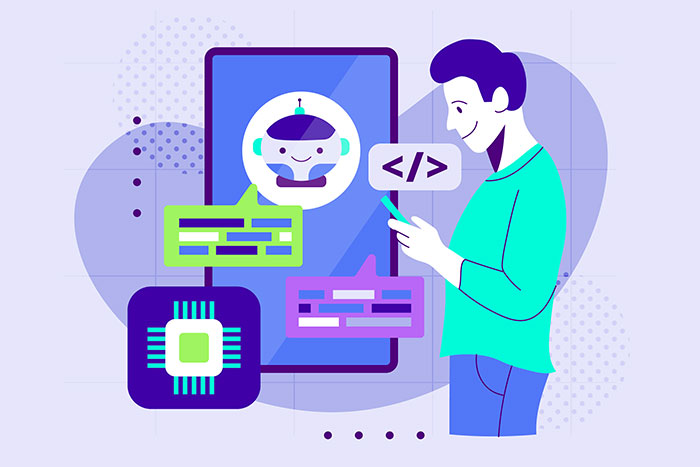
Vibe coding is an innovative approach to software development. It relies on the use of artificial intelligence to generate code from simple descriptions in natural language.
Instead of writing each line of code, developers describe what they want to achieve, and the AI produces the corresponding code.
This method allows you to focus on the intention and the end result, rather than on the technical details of the code. It is particularly suited to rapid prototyping, personal projects, or user-specific applications.
How does vibe coding work?
The vibe coding process generally takes place in three main stages:
1. Defining the objective
The user describes what they want to accomplish in natural language. Example: "Create a Python function that reads a CSV file."
2. Code generation
Artificial intelligence interprets the request and generates the corresponding code.
3. Execution and validation
The user executes the generated code to verify that it meets expectations.
Vibe coding reduces the complexity of software developmentand speeds up application creation, even for those without programming skills.
Practical applications of vibe coding
Vibe coding is used in various areas of web development:
Rapid prototyping:Startups and entrepreneurs use vibe coding to quickly create prototypes and test ideas without massive investment in development.
Website creation:Tools such as Webflow integrate AI to generate HTML, CSS, and JavaScript code from natural language descriptions, making it easier to design websites without technical skills.
Application development:Platforms such as Replit allow users to create applications by simply describing their features. AI then generates the necessary code.
Limitations and challenges of vibe coding
Despite its many advantages, vibe coding has certain limitations:
- Code quality:The generated code may not be optimal or may contain errors, requiring human review.
- Security:The use of automatically generated code can introduce vulnerabilities if the AI does not understand all the security implications.
- AI dependency:Overreliance on AI can reduce understanding of the fundamentals of software development.
It is therefore essential to combine vibe coding with human supervision to ensure the quality and security of applications.
Future prospects
Vibe coding represents a revolution in web development, democratizing application creation.
It allows people without technical training to bring their ideas to life. However, for complex or critical applications,human expertise remains essential to ensure robustness and security.
Conclusion
In the future, we can expect vibe coding to be integrated into broader development environments, offering intelligent assistance throughout the software development lifecycle.
This breakthrough paves the way for a new generation of intelligent tools designed to boost productivity and innovation.
Share the post "Vibe Coding: The new trend in web development in 2025"