Vibe coding
For many, coding has long been perceived as an activity reserved for experts with a perfect command of languages, algorithms, and data structures. This traditional view of programming is based on rigor, precision, and in-depth knowledge of IT tools. But today, a new approach is beginning to emerge: vibe coding.
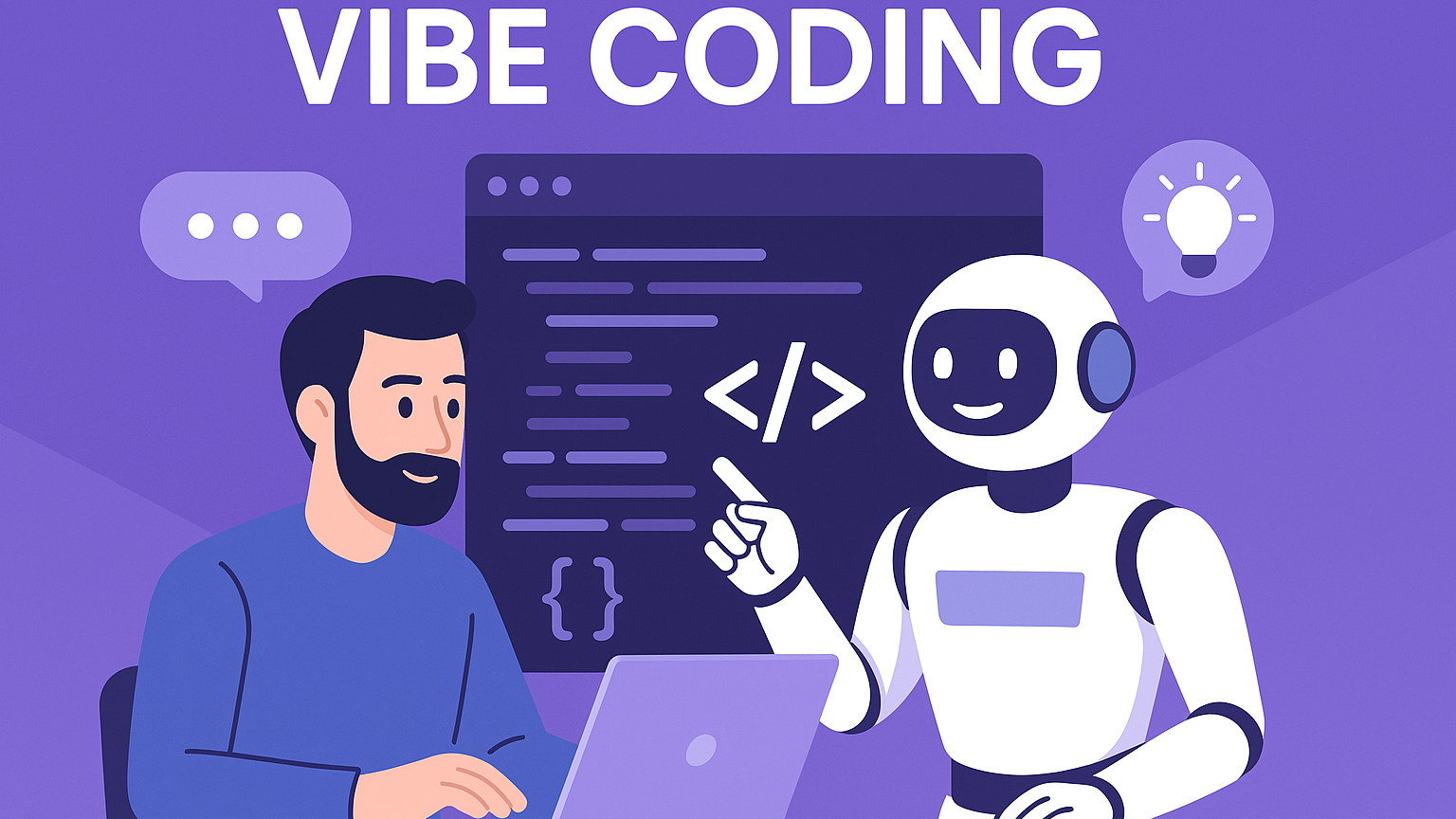
Recently popularized by Andrej Karpathy, a former researcher at OpenAI, vibe coding offers a more intuitive and uncomplicated approach to software development. The principle is simple: use artificial intelligence to transform ideas expressed in natural language into functional code. So, rather than writing each line of code manually, the developer (or creator) focuses on the logic and the expected result, leaving it to the AI to generate the technical structure.
How does it work?
Vibe coding uses AI tools such as ChatGPT or Copilot, which are capable of understanding instructions in natural language. For example, instead of writing a complicated algorithm to sort a list, you can simply say, "sort this list in descending order." The AI then creates the code in the requested language (Python, JavaScript, etc.).
This programming mode lowers the barrier to entry for beginners, but also allows experienced developers to focus on more creative and strategic aspects of projects.
The benefits of vibe coding
- Accessibility: you no longer need to know all the technical details to create a program that works.
- Time savings: AI quickly generates blocks of code that can then be adapted to suit your needs.
- Focus on logic: the developer explains what they want to do, and the AI takes care of the technical side.
- Fewer errors: the generated code is clean, which limits syntax errors.
Vibe coding: who is it for?
Vibe coding is aimed at a wide audience:
- Beginners who want to learn by quickly creating projects.
- Entrepreneurs who want to prototype an idea without being held back by technology.
- Experienced developers who want to speed up certain repetitive tasks.
An inspiring experience at NetDevices
At NetDevices, one of our employees, Dany, has been using vibe coding for 12 months.
Why?
Dany has Charcot's disease, diagnosed at the end of 2023. This neurodegenerative disease causes muscle wasting. In his case, the symptoms started in his right hand and gradually spread to his left hand, then his shoulders.
Until recently, he was able to perform his duties at work, but as the disease progressed, it became increasingly difficult, and he had to stop. However, thanks to vibe coding, artificial intelligence, and voice recognition tools, he has been able to continue coding by expressing his instructions aloud. This approach allows him to transform his ideas into code without having to type on a keyboard, and to remain active in technical projects. It is a concrete example of how this method makes programming more inclusive and accessible.
If you would like to follow his journey and interact with him, you can check out his Instagram profile: https://www.instagram.com/nousvscharcot/
Vibe coding: is it dangerous?
Some people wonder whether vibe coding poses any dangers. Could it make developers too dependent on AI or produce code that is difficult to modify? In fact, the problem mainly stems from using it without taking a step back. It is always important to understand what the AI is generating, reread the code, and maintain a critical eye.
Vibe coding is a valuable aid, provided you remain in control of what you are doing.
Towards a new era of development?
Vibe coding is not intended to completely replace traditional programming. Knowledge of the basics remains important for understanding and adjusting the generated code. But this method opens up a new avenue: that of more intuitive programming, where AI becomes a true creative partner.
At NetDevices, we already integrate these approaches to support our clients in developing customized applications. Would you like to find out how vibe coding and AI can accelerate your project while also making it less expensive?
Contact our web and mobile development experts!
Kyomi is the marketing manager at NetDevices. Passionate about digital technology, she supports companies with their web, SEO, and AI strategies to maximize their visibility and growth.