
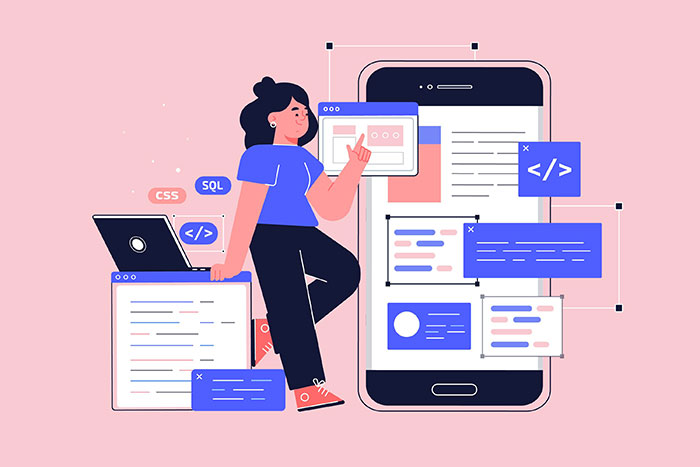
In 2025, UX/UI design continues to evolve, driven by new technologies and growing user expectations. Brands and companies that want to remain competitive must keep up with the major trends in web design and experience design. Three areas stand out in particular this year: evolutionary minimalism, generative artificial intelligence, and micro-interactions.
Evolving minimalism: simplicity and performance
Minimalism remains a strong trend in web and mobile design in 2025, but it is no longer limited to a clean aesthetic. The goal now is to offer a fluid, fast, and user-centered experience.
- Clean interfaces with sober, contrasting color palettes.
- Impactful typography that becomes a true graphic element.
- Simplified navigation to ensure a clear and intuitive user experience.
Example:SaaS applications and e-commerce platformsare adopting modular, streamlined, and highly customizable dashboards. Minimalism in 2025 aims to combine aesthetics and performance.
Generative AI at the service of UX/UI design
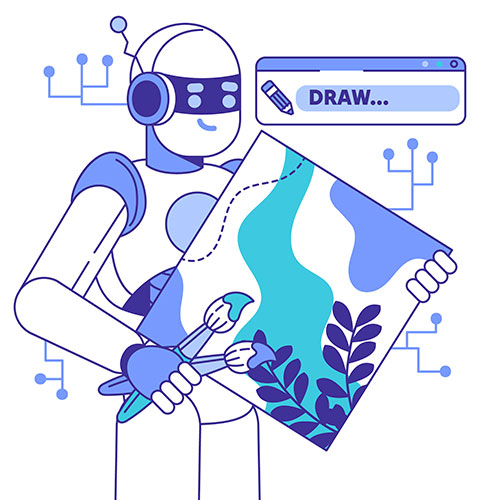
Generative artificial intelligence has become an essential tool for designers and developers. It is revolutionizing the way interfaces are designed by offering speed and customization.
- Accelerated prototyping:tools such as Figma AI transform wireframes into detailed mockups.
- Personalization of user journeys:interfaces adapt in real time to user behavior.
- Creation of visual assets:icons, palettes, or animations generated automatically according to context.
This trend also raises challenges: the risk of standardization, dependence on tools, and the need to preserve human creativity.
Micro-interactions: the art of captivating the user
Micro-interactions are small animations or visual feedback that enrich the user experience. They are becoming a major lever for improving engagement.
- Immediate feedback:visual confirmation when clicking or submitting a form.
- Immersive animations:smooth transitions, subtle 3D effects, micro-vibrations on mobile devices.
- Emotional experience:they enhance the enjoyment of use and make the interface memorable.
Example:An "add to cart" button that displays a dynamic and colorful animation encourages the user to continue their shopping journey.
Accessibility and emotional design: the guiding principles
Accessibility:adapted contrasts, keyboard navigation, voice tools.
Emotional design:visual storytelling, engaging colors, sensory interactions to create a strong connection with the user.
Conclusion
Evolving minimalism:clarity and performance.
Generative AI:rapid design and personalized experiences.
Micro-interactions:every action becomes engaging.
These trends, complemented by accessibility and emotional design, define a future where digital experiences will be simpler, smarter, and more human.
Share the post "Major UX/UI trends for 2025: minimalism, generative AI, and micro-interactions"